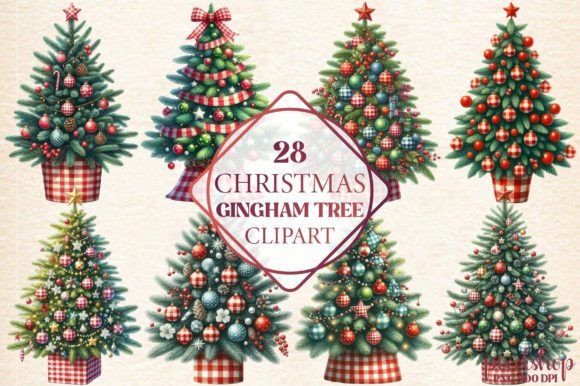
Review: Christmas Gingham Tree Clipart Freebies
As a graphic designer who has spent over a decade refining brand identities and seasonal campaigns, I approach every new asset with a critical eye. We are constantly bombarded with digital products, but few stand up to the rigors of real client work. Recently, I downloaded the Christmas Gingham Tree Clipart from a collection of Freebies to test its viability for an upcoming holiday project. My goal was not just to see if it looked cute, but to determine if it could carry the weight of professional commercial design. Here is my honest assessment of how this illustration performs in a live design environment.
First Impressions: Nostalgia Meets Modern Craft
The moment I opened the file, the mood was immediate. This is not your standard, glossy corporate holiday graphic. The Christmas Gingham Tree Clipart exudes a warm, handmade aesthetic that taps directly into the current trend of cottagecore and rustic charm. The gingham pattern adds a layer of texture that flat colors simply cannot achieve, creating a sense of depth and tactile appeal. For a designer, this is crucial because it allows the asset to feel like part of a physical object rather than just a digital overlay. It fits perfectly into projects that aim for authenticity, warmth, and approachability.
Real-World Application in Client Projects
I tested this clipart on a mock project for a small business specializing in artisanal baked goods. The client needed packaging design that felt homey yet polished. The Christmas Gingham Tree Clipart became the hero graphic for their limited-edition cookie boxes. Because the design has clear lines and distinct contrast, it scaled beautifully from the large front panel of the box down to the smaller sealing stickers. This versatility is rare in free assets, which often lose definition when resized.
Beyond packaging, I explored its use in social media graphics. For Instagram posts and Pinterest pins, the asset provided a strong focal point without overwhelming the text. When paired with a clean sans serif font for the promotional copy, the gingham pattern added just enough visual interest to stop the scroll. It also worked surprisingly well in editorial design for a local lifestyle blog’s holiday gift guide, serving as a decorative bullet point that tied the layout together.
Where This Asset Shines
Through my testing, I identified specific areas where this graphic design asset excels. It is ideal for:
- Product Mockups: The texture of the gingham looks realistic on tote bags and mugs, enhancing the perceived value of print-on-demand items.
- Sticker Design: The clear outlines make it perfect for die-cut stickers, a popular item for Etsy sellers and crafters.
- Cricut Projects: If available in SVG format, this design is a dream for cutters. The simple shapes allow for clean cuts in vinyl or cardstock.
- Printable Wall Art: The nostalgic vibe fits seamlessly into gallery walls featuring other vintage-inspired prints.
- Brand Identity Accents: It serves as an excellent secondary element for small business branding, adding personality to letterheads and business cards.
Limitations and Design Caution
However, no asset is universal. There are scenarios where I would advise against using the Christmas Gingham Tree Clipart. First, avoid using it in minimalist corporate branding. The playful, rustic nature of the gingham clashes with the sleek, serious tone required for financial or tech sectors. Second, be cautious with small sizes. If the gingham check is too fine, it can create a moiré effect when printed or appear as visual noise on low-resolution screens. Always test the legibility at the intended output size.
Additionally, this asset should not be placed over busy backgrounds. The pattern within the tree competes with complex textures. It requires negative space or solid, contrasting colors to breathe. I found that placing it over a deep forest green or a crisp white background yielded the best results, ensuring the visual hierarchy remained intact.
Typography Pairings and Visual Harmony
A key part of integrating any clipart is choosing the right typeface. I experimented with several font styles to see what complemented the Christmas Gingham Tree Clipart best. A bold script font created a traditional, elegant holiday card feel, while a handwritten font enhanced the handmade, crafty vibe. For a more modern look, I paired it with a geometric sans serif, which created an interesting tension between the organic pattern and the structured letters. Avoid overly decorative display fonts, as they can clutter the composition and reduce readability.
Technical Checks for Professional Use
Before delivering any design to a client, I run a strict technical checklist. Here is what you need to verify with this asset:
- File Formats: Ensure you have access to high-resolution PNGs with transparent backgrounds for digital use. If you are creating a sublimation design or a large-format print, check if a vector SVG design is included to prevent pixelation.
- Contrast Testing: Preview the clipart on both light and dark backgrounds. The gingham pattern may lose visibility on mid-tone grays or busy patterns.
- Print Quality: Run a test print at 300 DPI. Check for banding or color shifts, especially if you are using this for product labels or packaging design.
- Licensing Verification: Even though this is listed under Freebies, always read the license agreement. Confirm that it includes a commercial license if you are selling products featuring this design. Never assume free means unrestricted for business use.
Final Verdict for Designers and Creators
In the crowded creative marketplace, finding assets that balance charm with professionalism is difficult. The Christmas Gingham Tree Clipart succeeds because it offers a specific, trending aesthetic that resonates with today’s consumers. It is not just a generic tree; it is a design element that tells a story of tradition and comfort. For designers working with handmade businesses, boutique retailers, or lifestyle brands, this asset is a valuable addition to your toolkit. It elevates marketing visuals and adds a cohesive touch to brand identity systems. Just remember to respect its limitations regarding scale and background complexity. When used correctly, it transforms a standard layout into a memorable, engaging piece of creative design.