Review: Watercolor Christmas Funny Fat Dog Design
As a designer who spends more time staring at stitch simulations than I care to admit, I have learned that not every cute graphic translates well to thread. We see thousands of digital files flood the market every holiday season, but few survive the transition from screen to fabric with their charm intact. This season, I took a close look at the Watercolor Christmas Funny Fat Dog design to see if it holds up under the needle. My goal was not just to admire the artwork, but to evaluate its viability for real-world embroidery projects, from custom client orders to my own small shop inventory.
First Impressions and Visual Personality
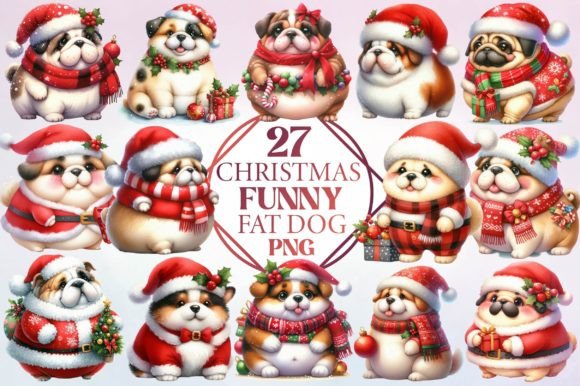
The first thing that strikes you about this piece is its mood. It captures that specific, cozy humor of the holidays without relying on cliché Santa imagery. The "fat dog" aesthetic is inherently appealing, tapping into the current trend of chunky, lovable animal illustrations. Because this falls under the category of Illustrations, it relies heavily on soft edges and blended tones rather than rigid outlines. For an embroidery designer, this presents both an opportunity and a challenge. The watercolor effect suggests a need for careful thread blending, while the humorous subject matter demands clarity so the joke lands instantly.
Visually, the layout feels balanced. The bulk of the dog’s body provides a solid anchor for fill stitches, which is excellent for covering fabric efficiently. However, the facial expressions and any accompanying text elements require precision. If the details are too fine, they risk getting lost in the texture of the fabric. In my initial assessment, the design seems to strike a good balance between artistic flair and technical feasibility, provided you choose the right materials.
Real-World Application: The Tote Bag Test
To truly understand how a machine embroidery design performs, you have to imagine it on a product. I visualized this design on a heavy canvas tote bag design. This is a popular item for Etsy sellers and boutique owners during the fourth quarter. The sturdy nature of canvas supports the weight of the stitching, preventing puckering. The humorous aspect of the fat dog makes it an impulse buy for gift shoppers looking for something lighthearted.
When stitched on a natural cotton canvas, the watercolor vibes can be mimicked using variegated threads or by layering different shades of brown, cream, and festive reds. The result is a handmade product that feels premium and thoughtful. It is not just a logo slapped on a bag; it is a piece of art. This kind of holiday embroidery stands out in a crowded market because it offers personality. Customers are increasingly looking for items that feel personal and unique, and this design delivers that emotional connection.
Fabric Considerations and Stitching Challenges
While the design is charming, it is not universally compatible with every textile. The watercolor style implies soft gradients, which can be difficult to achieve on textured fabrics like terry cloth or heavy wool. On these surfaces, the finer details of the dog’s eyes or collar might disappear. I would advise against using this on highly textured materials unless you are simplifying the stitch file significantly.
Similarly, stretchy fabrics like jersey knits for t-shirts require caution. The stitch density must be appropriate to prevent the fabric from distorting. If the design is too dense, it will create a stiff patch that pulls awkwardly when the garment is worn. For sweatshirt embroidery, however, it works beautifully. The fleece or cotton blend of a sweatshirt provides enough stability to support the fill areas without excessive stabilizer usage. Always test on scrap fabric first. This is non-negotiable for professional results.
Dark fabrics present another hurdle. Watercolor designs often rely on light, airy colors. If you are stitching this on a black hoodie, you will need to use a white underlay or switch to a more opaque thread palette to ensure visibility. Contrast is key. Without it, the nuanced shading of the Illustrations will vanish into the background.
Commercial Viability for Small Businesses
For craft business owners, time is money. A design that takes four hours to stitch is rarely profitable unless you are charging premium prices. While I do not have the exact stitch count for this specific file, the visual complexity suggests a moderate run time. It is likely suitable for items where the embroidery is the main feature, such as pillow covers or wall art, rather than small accents on caps.
This design fits well into a lineup of personalized gift options. Imagine offering this as part of a "Pet Lover’s Holiday Collection." You could pair it with matching embroidered patch designs or use it on aprons for kitchen-themed gifts. The versatility allows for cross-selling. An Etsy seller could use this image in printable mockup listings to gauge interest before committing to large batches of stitched inventory. This reduces risk and helps validate the design’s appeal to your specific audience.
Technical Notes for the Embroiderer
- Stabilizer Selection: Use a cut-away stabilizer for garments that will be washed frequently. This ensures the design remains stable and does not pucker over time. For tote bags, a tear-away might suffice if the fabric is heavy enough.
- Thread Choices: To replicate the watercolor look, consider using rayon or polyester threads with a high sheen. Matte threads can also work for a more rustic, vintage feel. Test different thread colors to see which combination best captures the original artwork’s spirit.
- Hoop Size: Ensure your hoop size accommodates the full design without cropping. If the design is large, you may need a 5x7 or 6x10 hoop. Check the file specifications before purchasing or downloading.
- Detail Inspection: Zoom in on the digital file. Look for tiny running stitch details that might break easily. If there are isolated stitches, consider removing them or merging them with larger shapes to improve durability.
Enhancing Brand Consistency and Trust
Using high-quality designs like Watercolor Christmas Funny Fat Dog contributes to brand consistency. When customers receive a finished product that looks professional and well-executed, their trust in your brand grows. Sloppy stitching or poorly chosen designs can damage a reputation quickly. By selecting assets that are technically sound and aesthetically pleasing, you signal professionalism.
This design also has high "giftability." It is the kind of image that makes people smile immediately. In the context of commercial embroidery, emotional response drives sales. A funny, fat dog in a holiday setting is approachable and warm. It lowers the barrier to purchase because it feels safe and joyful. For small shop product lines, this emotional resonance is invaluable.
Final Verdict and Practical Advice
The Watercolor Christmas Funny Fat Dog is a strong contender for your holiday catalog. It balances artistic merit with practical application, provided you respect its technical requirements. It is not a plug-and-play solution for every fabric type, but for the right applications—such as canvas totes, sweatshirts, and home decor—it shines.
Before you commit to production, verify the license terms. Ensure that the digital embroidery file allows for commercial use if you plan to sell finished items. Check the included formats to ensure compatibility with your machine. Once you have confirmed these basics, run a test stitch. Adjust your tension and speed as needed. With proper execution, this design can become a standout item in your design assets library, driving engagement and sales throughout the holiday season.
Remember, the best embroidery projects are those where the technology serves the art. This design offers a delightful subject matter that, when treated with care and technical precision, can elevate your custom apparel and gift offerings. It is a reminder that even in a digital age, the tactile joy of a well-stitched, funny, and festive image remains a powerful tool for connection and commerce.